
Will Insurance Cover My Roof Replacement? What Homeowners Should Know
When your roof is damaged, one of the first questions most homeowners ask is: Will insurance cover my roof replacement? The answer is often yes, but it depends on what caused the damage, the age of your roof, and the type of policy you have.
Understanding how roof insurance claims work can save you time, stress, and thousands of dollars. In this guide, we’ll explain what insurance usually covers, what it doesn’t, and how to make sure you get the most from your claim.

Does Homeowners Insurance Cover Roof Replacement?
In most cases, homeowners’ insurance covers roof damage caused by sudden and accidental events, such as:
Hail storms
High winds
Falling trees or debris
Heavy rain from a covered storm
Fire damage
If your roof is damaged by one of these events, your insurance company may pay for roof repairs or a full roof replacement, minus your deductible.
However, insurance does not cover damage caused by normal aging, poor maintenance, or long-term wear and tear. If shingles simply wear out over time, that’s considered the homeowner’s responsibility.
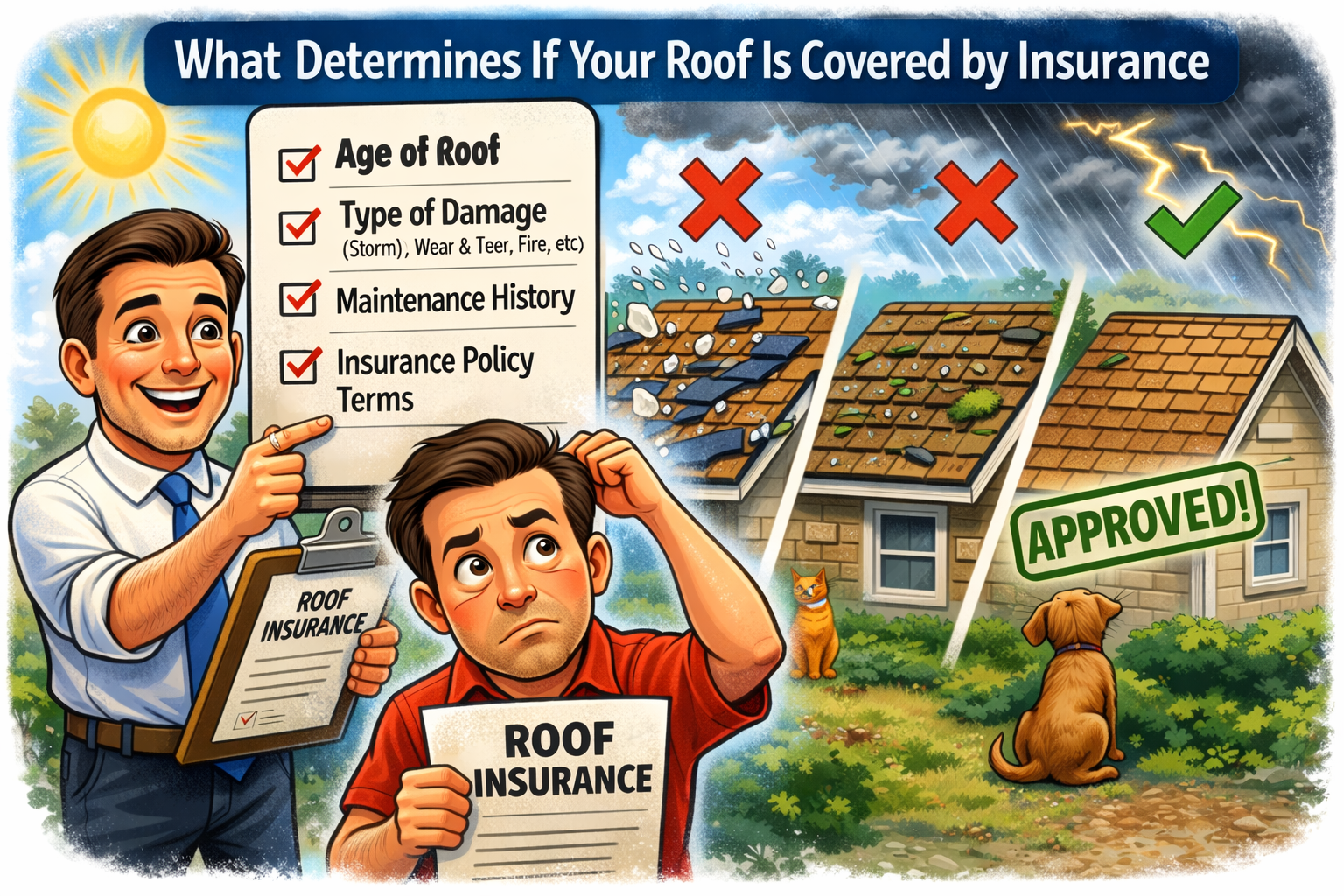
What Determines If Your Roof Is Covered?
Several factors affect whether insurance will pay for your roof replacement:
1. Cause of Damage
Insurance covers unexpected events, not neglect. Storm damage is usually covered, while old or deteriorating roofs are not.
2. Age of the Roof
Older roofs may receive limited coverage. Some policies only pay the actual cash value (ACV) instead of the full replacement cost if your roof is past a certain age.
3. Type of Policy
There are two main types:
Replacement Cost Value (RCV): Pays to replace your roof at today’s cost.
Actual Cash Value (ACV): Pays the depreciated value of your roof.
RCV policies are better for homeowners because they reduce out-of-pocket costs.
4. Your Deductible
Your deductible is the amount you pay before insurance covers the rest. If your deductible is $1,500 and your roof costs $12,000, insurance pays the remaining balance after the deductible.
What Is Not Covered by Roof Insurance?
Insurance companies typically deny claims for:
Normal wear and tear
Poor installation
Lack of maintenance
Mold from long-term leaks
Cosmetic damage (in some policies)
That’s why regular roof inspections are important. Catching storm damage early helps prevent claim denials later.
Should You File a Roof Insurance Claim?
Filing a claim makes sense when storm damage is significant and the repair cost is much higher than your deductible.
Before filing:
Have a professional inspect your roof.
Get documentation and photos.
Compare repair cost vs. deductible.
If the damage is minor, paying out of pocket may be better. If damage is widespread, insurance usually makes financial sense.
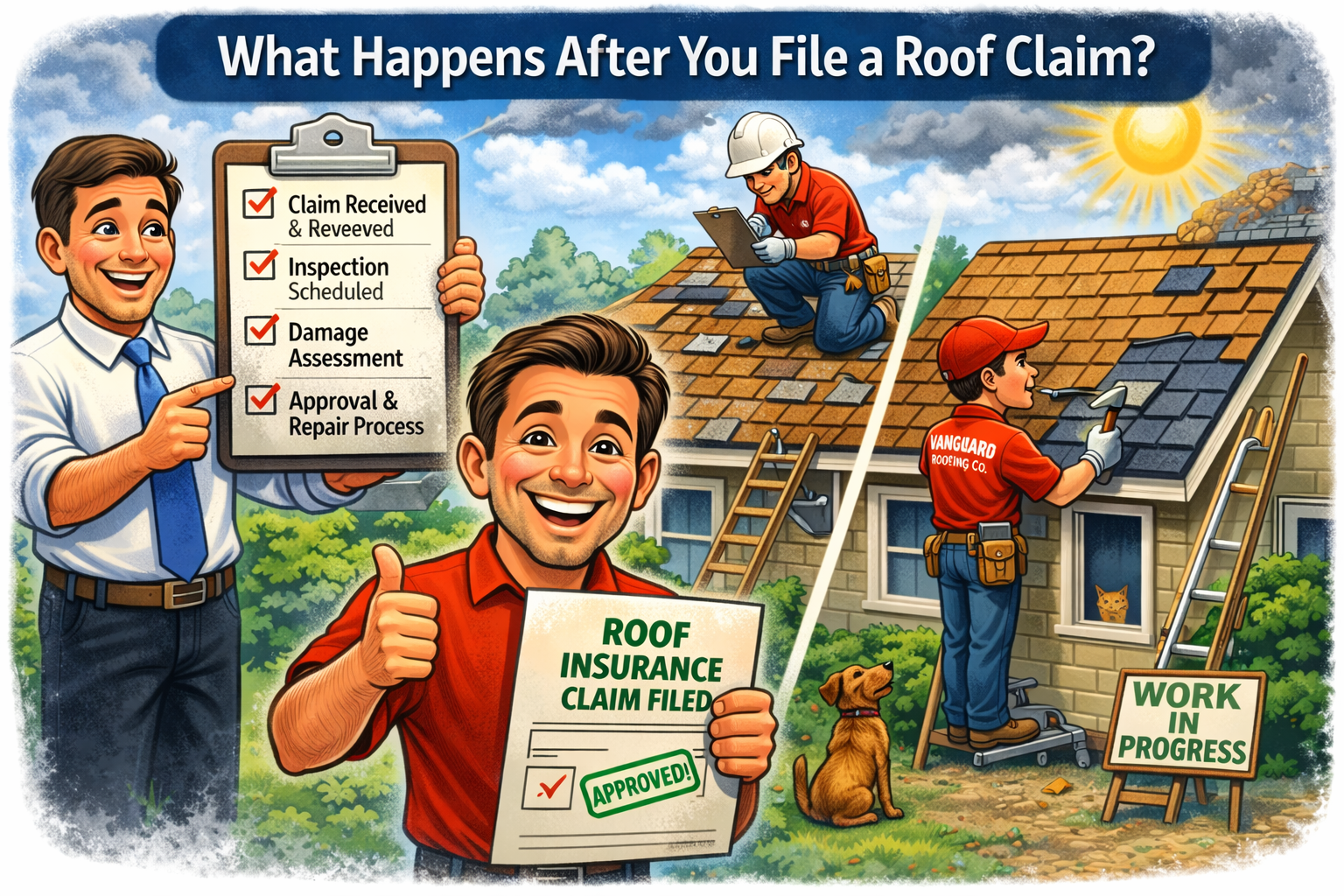
What Happens After You File a Roof Claim?
Here’s what the roof insurance claim process typically looks like:
Schedule a roof inspection.
File your claim with insurance.
An adjuster inspects the roof.
Your contractor meets with the adjuster.
Insurance approves repairs or replacement.
Work begins once payment is issued.
A qualified roofing contractor can help document damage, meet with adjusters, and make sure nothing is overlooked.
Can a Roofing Contractor Help With Insurance?
Yes, and they should.
An experienced roofing contractor like Vanguard Roofing Co. can:
Provide a professional inspection
Document storm damage
Meet with the insurance adjuster
Review the scope of work
Ensure all damaged areas are included
This protects you from underpaid claims and surprise costs later.
How Long Do You Have to File a Roof Claim?
Most policies require claims to be filed within a certain time after the storm, often 6 to 12 months. Waiting too long can lead to denial because the insurance company may say the damage worsened due to neglect.
That’s why it’s smart to schedule a roof inspection as soon as possible after severe weather.
Signs You May Have Insurance-Covered Roof Damage
You might qualify for insurance coverage if you notice:
Missing or lifted shingles
Hail dents
Granules in gutters
Water stains on ceilings
Soft spots on the roof
Leaks after storms
Some damage isn’t visible from the ground, so a professional inspection is the safest way to know for sure.

FAQ
-
Possibly, but coverage may be limited. Older roofs often receive depreciated (ACV) payments instead of full replacement cost.
-
Yes. Your deductible is your responsibility and is paid toward the total project cost.
-
A contractor can review the denial, provide additional documentation, and request a re-inspection if necessary.